Workshop on Augmenting Human Dexterity
From multisensory feedback and motor capabilities to skill acquisition
A new, interactive half-day workshop at UIST 2026
Time: Monday, November 2, 1:45 – 5:00 PM
Location: University of Michigan Detroit Center
Registration: UIST website (limited seats)
-
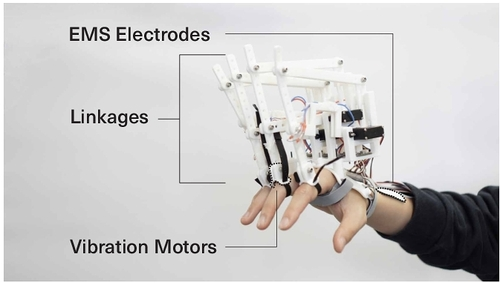 Exploring the effects of haptic feedback and its customization on motor skill learning [Lee et al. CHI '24]
-
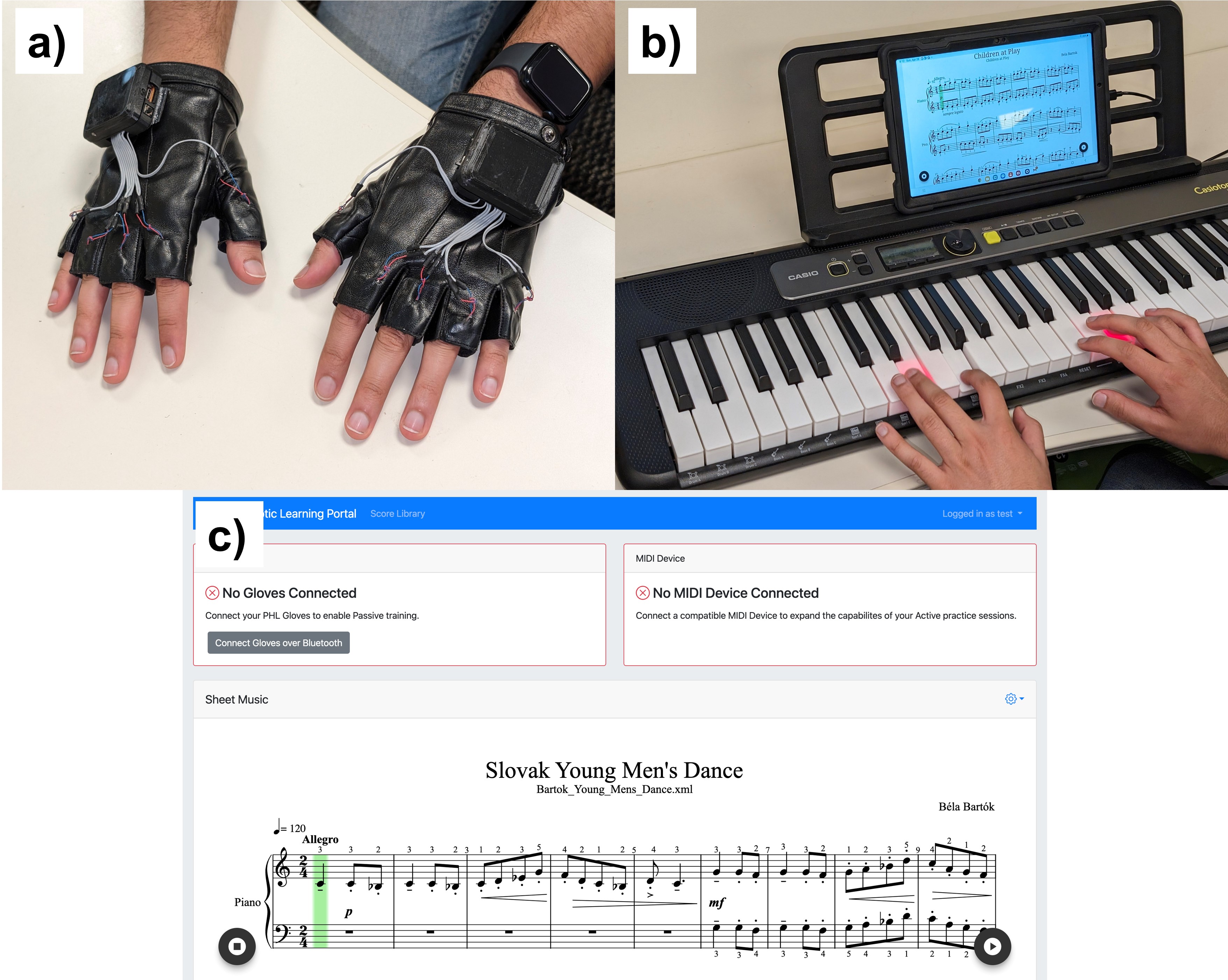 Passive haptic rehearsal for augmented piano learning in the wild [Gemicioglu et al. IMWUT '24]
-
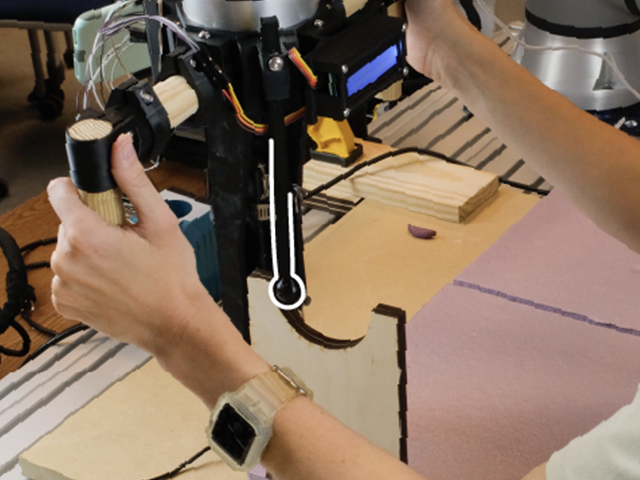 Programming collaborative robots through manual actions for craft-aligned digital fabrication [Bourgault et al. UIST '25]
-
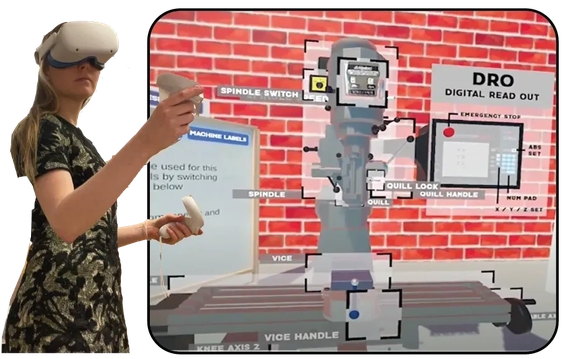 Training for open-ended drilling through a Virtual Reality simulation [Lie et al. ISMAR '23]
-
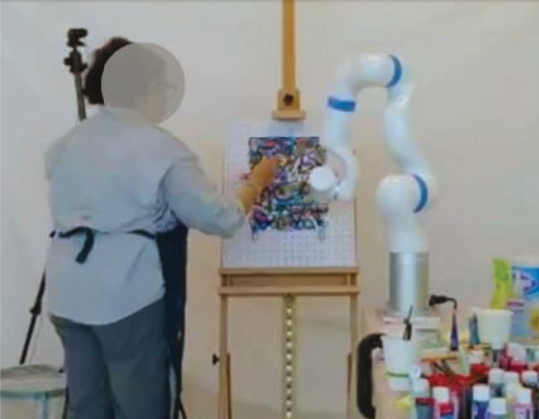 Artists’ views on robotics involvement in painting productions [Cocchella et al. IEEE Robotics & Automation '23]
-
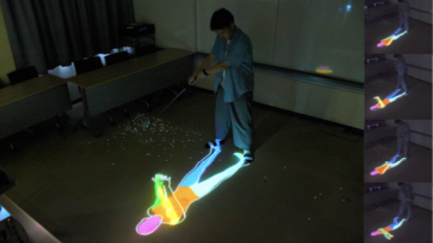 Golf training system using sonification and virtual shadow [Ikeda et al. SIGGRAPH '19]
-
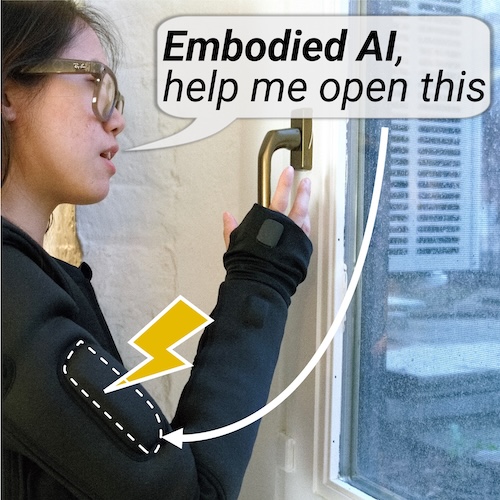 Providing users with physical assistance through electrical muscle stimulation by constraining multimodal-AI with embodied knowledge [Ho & Nith et al. CHI '26]
-
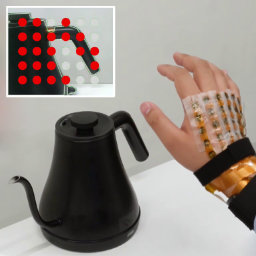 A sensory substitution that supports manual interactions for Blind users[Teng et al. CHI '25]
Human dexterity enables versatile and precise manipulation in everyday life. Recent advances in wearable and mobile computing have opened new ways to augment this dexterity. These efforts go beyond traditional assistive tools—whose primary function has been to restore or enhance strength—and instead aim to support more precise and complex performance across diverse domains, such as playing musical instruments or performing precision tasks at a workbench. A range of technologies has been explored, including multimodal sensory cues, adaptive learning schemes, robots, and exoskeletons. Yet individual projects remain limited in scope, often confined to a specific technology or application domain. Because dexterity is inherently multifaceted, no single perspective is likely to capture it fully—yet UIST has not seen a dedicated effort to bring these perspectives together.
We therefore propose this workshop, framing the topic as a broad goal: augmenting human dexterity. We aim to bring together researchers including those from mechanical engineering, neuroscience, learning science, domain-specific expertise, to discuss what dexterity entails and how technology might support it in a more holistic way. Through interdisciplinary talks, interactive demonstrations, and collaborative discussions, we hope to map out a broad research agenda in this direction.
Scope of the workshop
Sensorimotor integration and augmentation. We will examine insights from human sensory and motor systems and assess how this research could be leveraged to augment dexterity. What sensory modifications would be most beneficial (e.g., tactile, force feedback)? What motor capabilities are desirable for particular skills? To what extent can we make humans faster, more precise, and more flexible in performing physical tasks?
Physical skill acquisition. We will discuss how physical skills are acquired. What are the most effective strategies for teaching, learning, and retaining physical skills in the long term? How can skills be transferred from one person to another, or even across different domains? To what extent can technology support this learning process? How might human-robot interaction shape the acquisition of physical skills?
Meta-dexterity. Augmenting dexterity can also change how we feel about our bodies and our actions. How should we address questions of agency, embodiment, responsibility, and meaning that arise from this augmentation? And how might augmenting dexterity reshape the way we think, act, and collaborate with others?
Workshop schedule
| Time | Activity |
|---|---|
| 1:45 pm - 2:00 pm | Opening Participant introductions |
| 2:00 pm - 3:00 pm | Keynotes Talks (final speakers to be announced soon) |
| 3:00 pm - 3:30 pm | Demos & Coffee break Show your demos (AR, wearables, system, and more) |
| 3:30 pm - 5:00 pm | Group discussion Prototype a collaborative research |
Register
Register the workshop along with UIST registration or workshop can be added to an existing registration at any time. Seats are limited. You can see all UIST workshops here.
No additional submission is required. Bringing a demo is strongly encouraged!
Organizers
Shan-Yuan Teng
National Taiwan University

Tan Gemicioglu
Cornell Tech
Kyungyeon Lee
University of Maryland
Dishita G. Turakhia
Emory University

Patricia Alves-Oliveira
University of Michigan
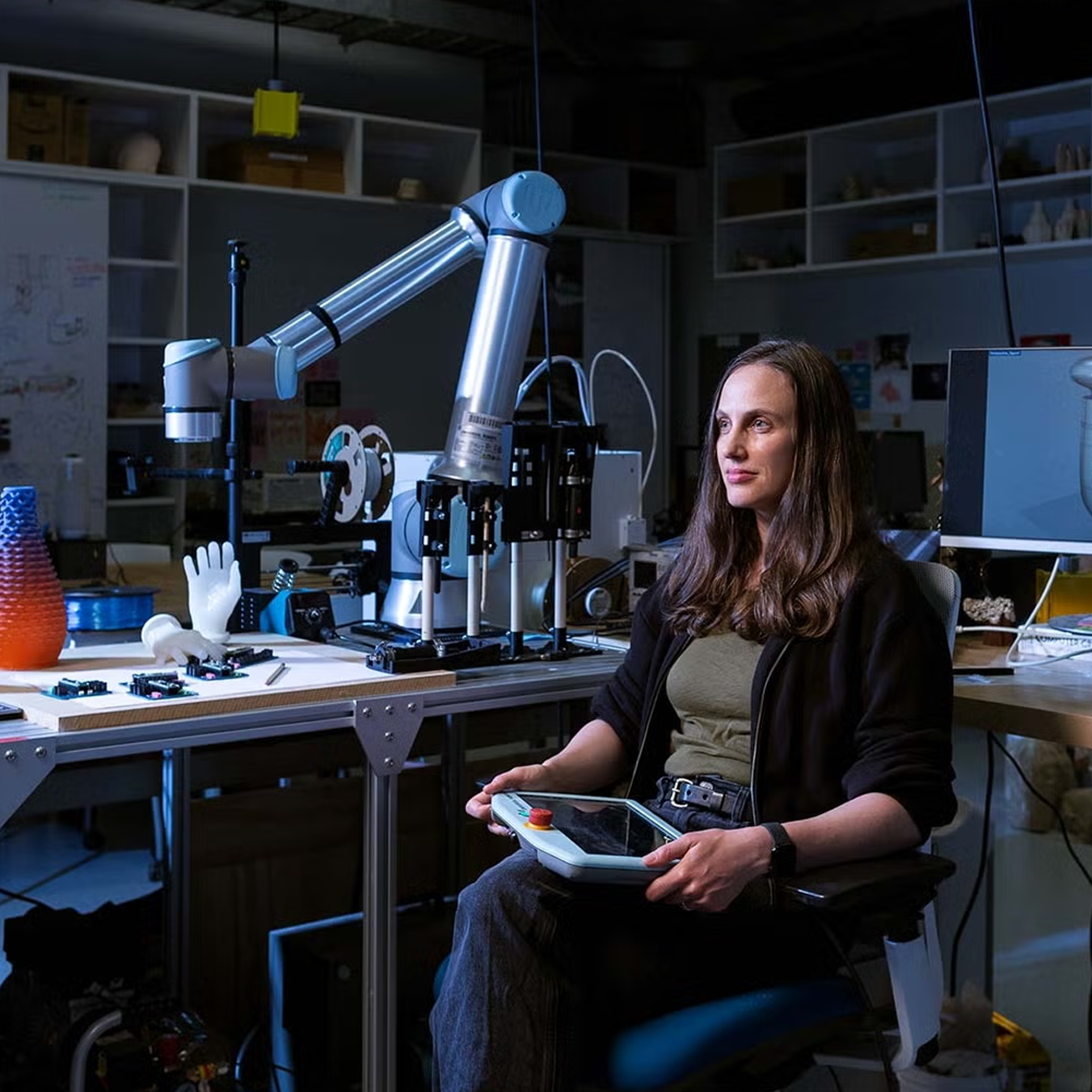
Jennifer Jacobs
University of California, Santa Barbara
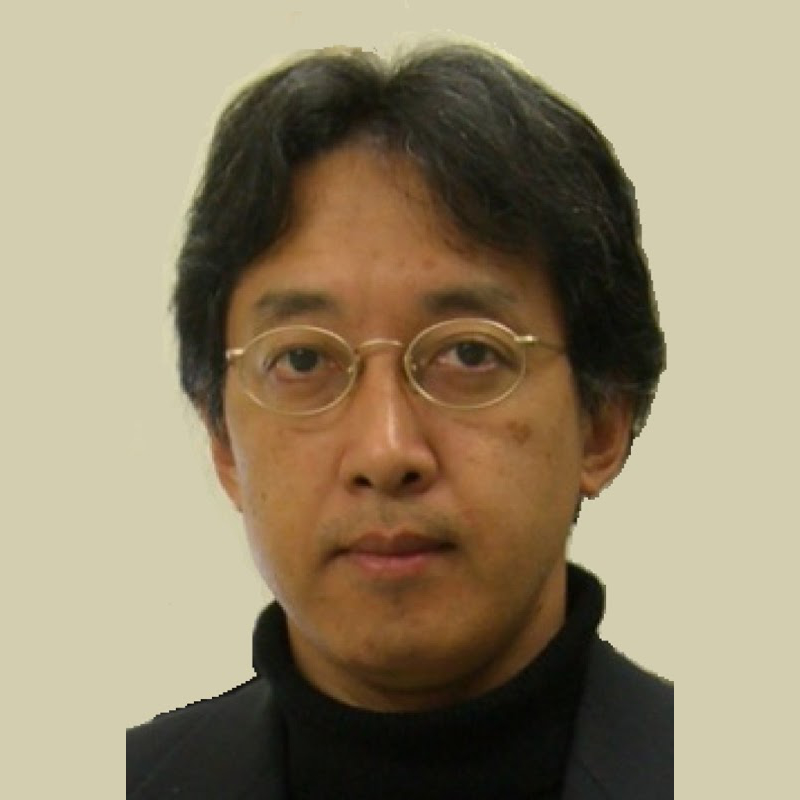
Hideki Koike
Institute of Science Tokyo
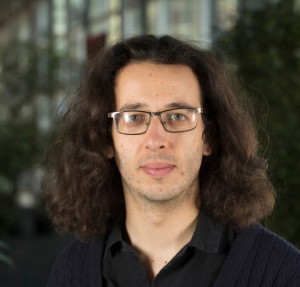
Pedro Lopes
University of Chicago
Jun Nishida
University of Maryland
Contact
If you have any question about this workshop, feel free to contact Shan-Yuan Teng (tengshanyuan@csie.ntu.edu.tw)